
As a high school English and media (film) studies teacher I have had quite a few, as we educators call them, “teachable moments” over the course of my career. These moments are not part of planned lessons and often come about due to a comment made by a student. They may or may not be related to the curriculum, but they are almost always valuable. A few weeks ago, I experienced a significant teachable moment in my film class and it taught us all a lesson which is quite memorable. Today, I’d like to share it with you.
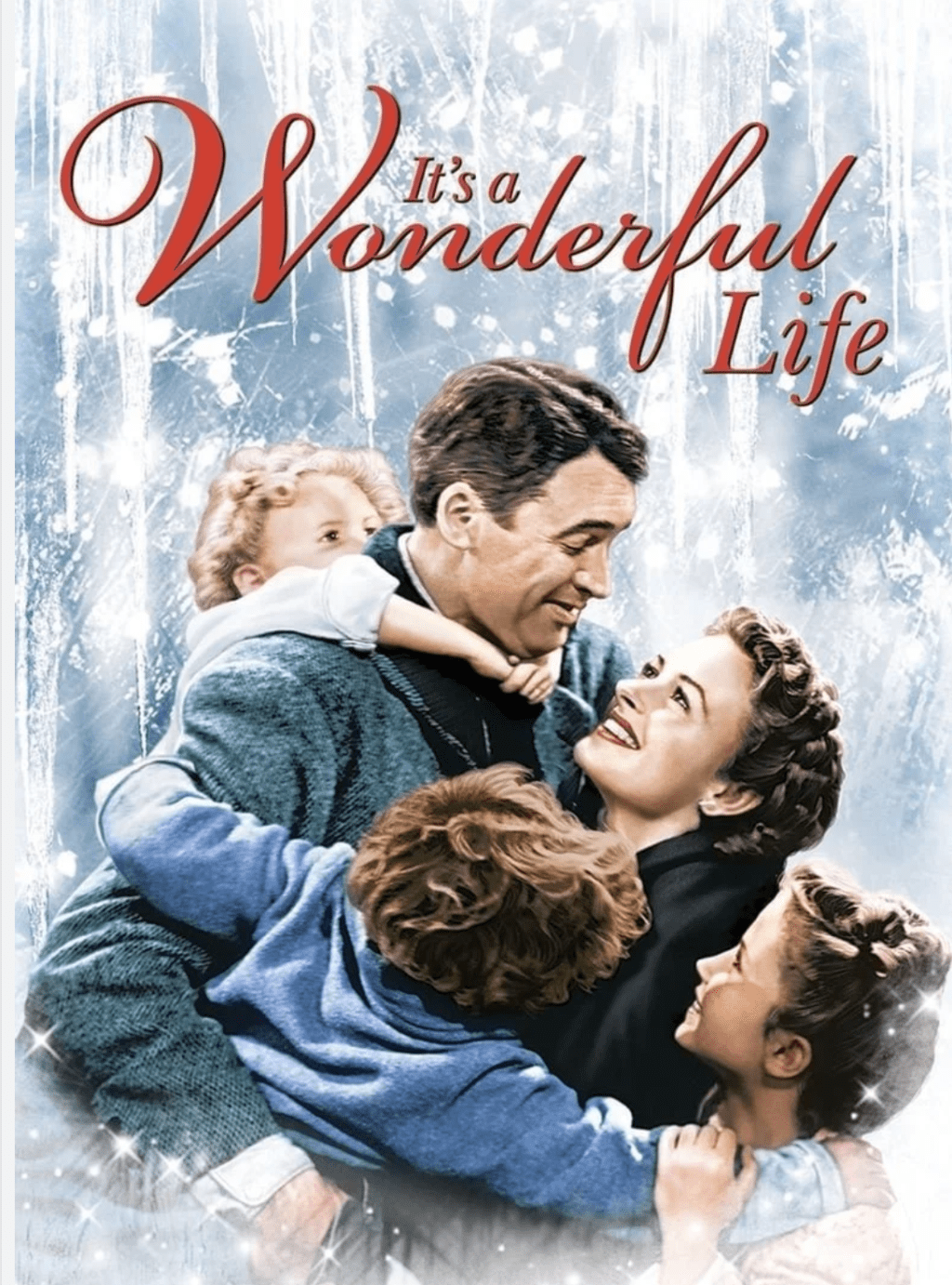
Each year before the holiday break I screen the film It’s a Wonderful Life with my media class, which is composed of high school juniors and seniors. I teach that film for a few reasons: it highlights a lot about how the film industry of the time (1940s) worked (For example, did you know that it was one of the first films where the villain does not get his comeuppance?), it won an award for special effects (the snow making was ground breaking at the time) and it works perfectly before winter break during which many students celebrate Christmas, as George Bailey’s transformative moment takes place on Christmas Eve.
After screening the film, my students and I discuss it and the students complete an analysis of the film via a worksheet I have created. The worksheet includes questions about the plot and the characters. One of the questions is:
What is the purpose of the scene in which George Bailey jumps into the river, not to commit suicide, but instead to save Clarence? What is the movie suggesting about people?
Sadly, many students responded that although they understood that the film was suggesting people’s inclination is to help others in need and to put the needs of others before their own, they did not feel that the scene was realistic. One student commented on the worksheet that “No one would do that today”. When I read that comment, I was almost brought to tears, partially because I was sad that such a young person was so jaded about the world, but also because I was upset that part of me agreed with the statement.
I thought about what to say to my students for the rest of that day and night. It weighed on me so much that I spoke with my husband and mother about it. Then, it dawned on me: the students I have in that class are really good people. I mean this sincerely. They are friendly and respectful toward one another (today, two of the boys walked in together. One had his arm around the other’s shoulder and they were laughing as they entered the room. It was so nice to see!). They are also fully engaged in class, share some very mature and well-thought out insights during our class discussions and, as I have told them many times, make me happy to come to work to teach them. They are the “George Baileys” of the world, even if they believe that everyone else around them isn’t.
I went back to class the next day and told them what I thought: They may not be able to change the entire world with their actions, but they can make their own worlds better, which means the lives of those around them will be better as well. Though they did listen to what I had to say, I could see the skepticism which still remained on their faces.
Then, a couple of weeks later, I got a call from my sister. She shared with me that earlier in the day she stopped at a shopping center to pick something up before heading off to an appointment. She was already short on time and running late, and when she got back into her car in the lot it wouldn’t start, as the battery was dead. She was parked between two other cars and had no idea what to do other than call for roadside assistance, which would be time consuming and expensive. She went into one of the local stores and an older man behind the counter said he couldn’t help her, but that she should pop her hood so someone else might be inclined to stop and see if s/he could help. My sister reluctantly did as he suggested, though she doubted it would work. She shared that within minutes a middle-aged man with his teenage daughter approached her and asked if he could help. She explained the situation and said that though she appreciated the offer, she didn’t see how he could help, as her car was wedged between two parked cars and cable wires wouldn’t reach his car even if he parked behind her. He told her to wait a moment for him to return. He brought back with him a portable battery that he keeps in his car. He hooked it up and together, they got her car running again. He made sure she was safe and felt comfortable getting back on the road again before he departed. She thanked him profusely and asked how she could repay him. He graciously denied payment, so my sister asked if he would share his email address so she could send him a “thank you” card. He reluctantly did so (My sister told me that after we spoke she was going to email him a gift card, as that was the least she could do).
As we spoke on the phone, my sister and I discussed how thankful we were for this man’s generosity. Though it was unfortunate that my sister’s car battery died, this man’s selfless action revived our faith in people. It made us both feel so happy. Then I remembered my students and what they had said about George Bailey.
The next day in film class, just a week before Christmas, I shared my sister’s story with my students. I wanted the boys and girls in my class to have concrete evidence that there is good in the world. They should know that there are people that will help strangers, even if nothing is “in it” for them. They listened to what I had to share, and this time there was less skepticism and even some smiling.
I don’t think the gentleman who helped my sister will ever read this post, so I’m going to have my sister email it to him on my behalf. I want him to know that not only did he help my sister that day, he helped restore faith in humanity for me and our family members, who are so glad he was there for our loved one when she needed assistance. He also restored faith in humanity for a class full of teenagers who will hopefully now believe that George Bailey is not just a fictional character in a story. There are many “George Baileys” who walk among us, and we too can be “George Baileys” for others. That man’s kind act proves that it really is a wonderful life because we have the power to make it that way.
To him I say, “Thank you and Merry Christmas (I hope you get something nice for yourself with that gift card)!” To my readers, thank you for reading. May you, and all those you love, always be surrounded by “George Baileys” and may you be a “George Bailey” for others wherever you go.
May 2026 bring you much peace and joy. Happy Holidays!
p.s. My sister received a response from the man who helped her. Though he was thankful for the gesture, he respectfully refused the gift card she sent him. A “George Bailey” indeed!

 Cherry Picked