
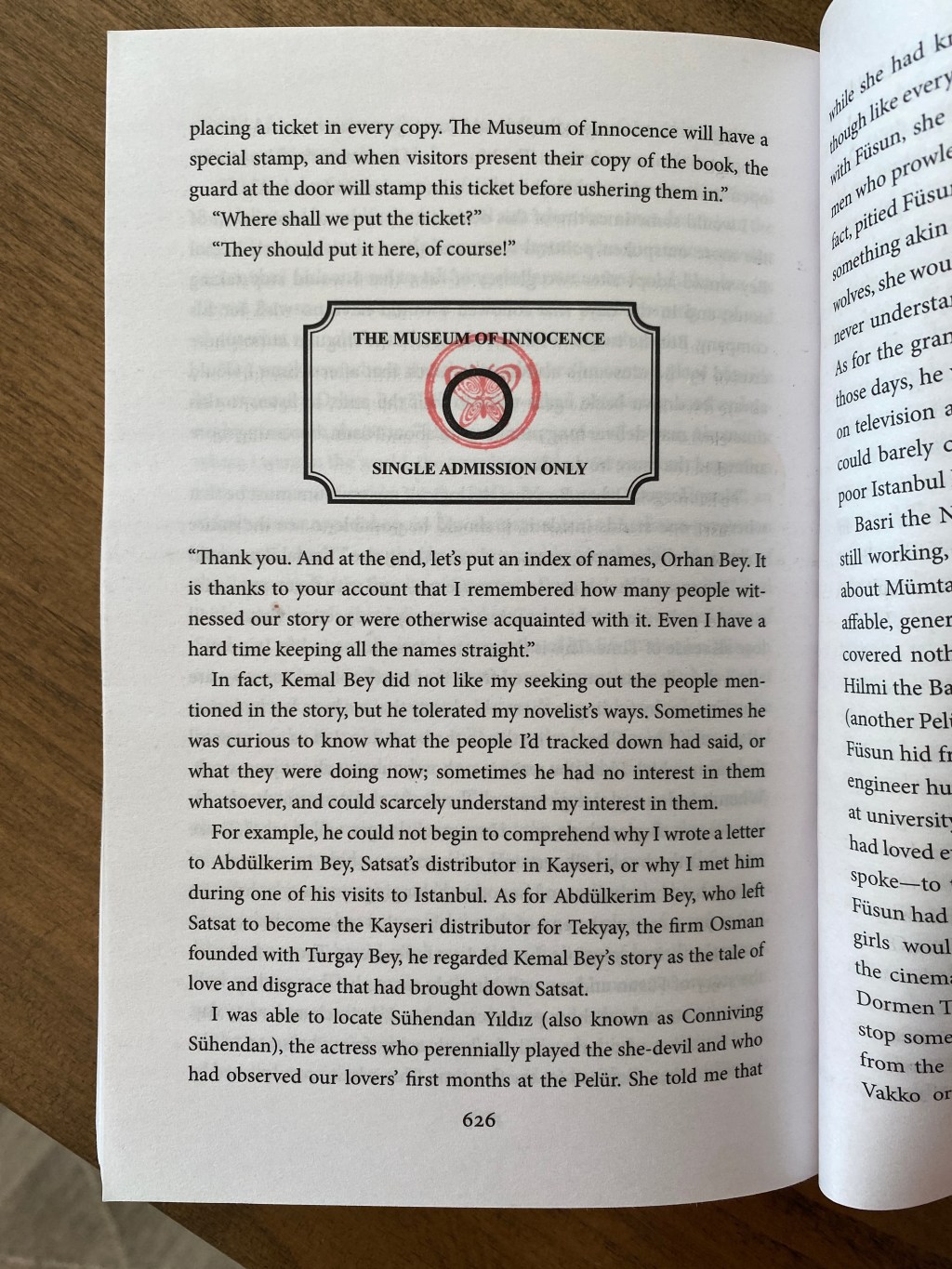
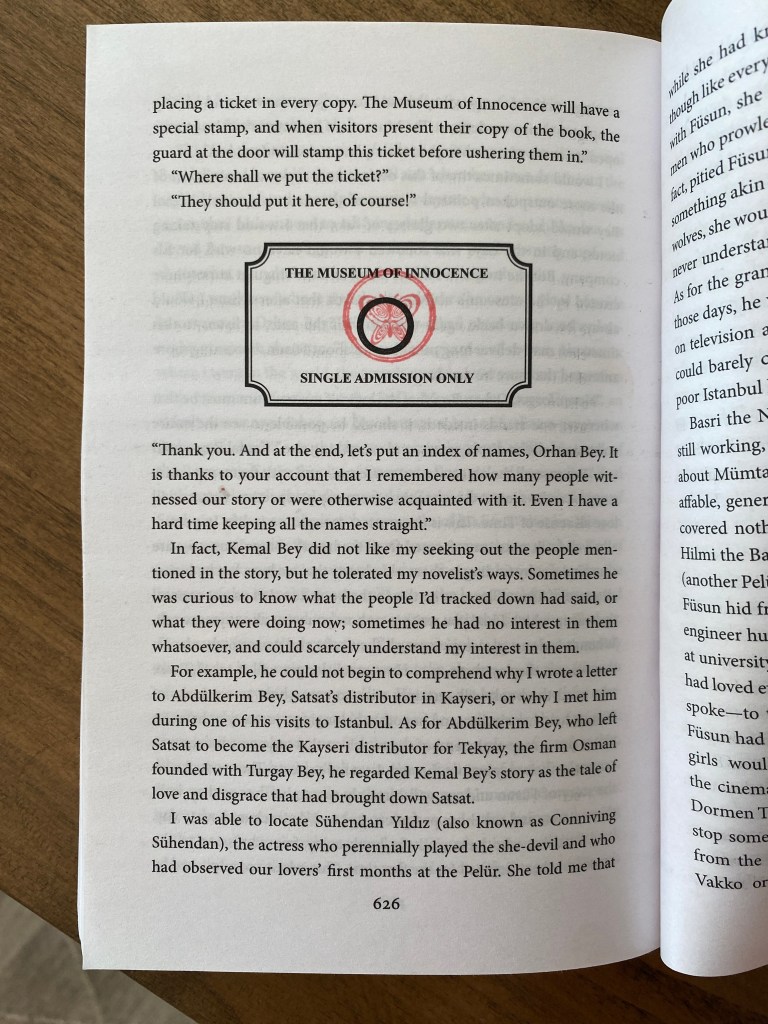
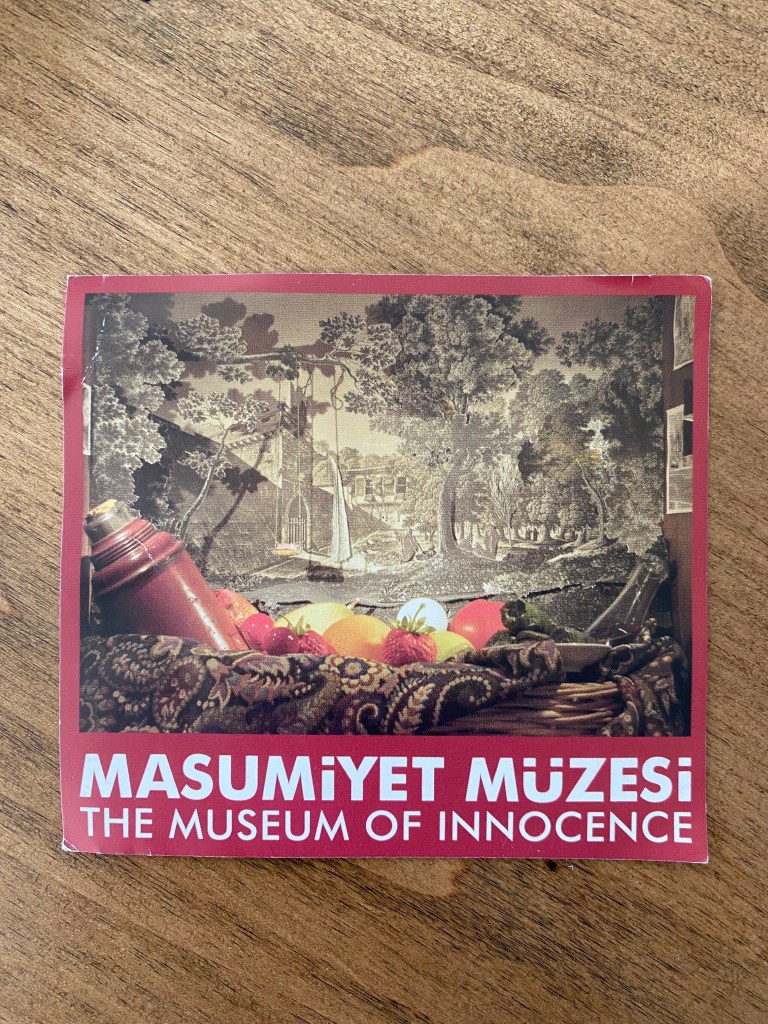
Last week, I was fortunate enough to be able to travel overseas to Türkiye and during my travels there, visit The Museum of Innocence (Masumiyet Müzesi) in the Çukurcuma neighborhood of the Beyoğlu district in Istanbul. The museum, which opened in April 2012 and contains more than one thousand objects, was created in tandem with Orhan Pamuk’s 2008 novel of the same name (Pamuk recently released a series on Netflix based on the novel as well). Admission to the museum is free to those who own the book, which contains a printed ticket that is stamped upon entry. Being that I brought my book with me, I now have a special keepsake of my visit.
As an English teacher, I was quite moved by Pamuk’s story because it is a unique take on loss of innocence, a prevalent theme in high school literature, but the books I teach often focus on innocence lost during one’s childhood. What Pamuk skillfully reminds his readers is that there are many forms of innocence, and that innocence can be lost at any point in life. Moreover, one is not aware of his or her innocence until it has been lost, as it goes with so many valuable things in life.
If you are unfamiliar with the novel, The Museum of Innocence tells the story of Kemal, a well-to-do Turkish man in Istanbul who at the age of thirty, falls deeply in love with his eighteen year old distant relative, Füsun. What complicates matters is that Kemal is engaged to be married to another woman, Sibel, and Füsun’s family is not wealthy and therefore not part of Kemal’s social class. Both of these complications prevent Kemal from pursuing his relationship with Füsun openly. Over the years, Kemal’s affair and obsession with Füsun prompts him to collect items he associates with her, all of which end up in a museum he eventually creates to honor her. Though the story is told from Kemal’s perspective, in my opinion, it is Füsun who is the center of the narrative. The museum Kemal creates is really an ode to Füsun’s innocence and his naivete and perhaps even arrogance in not appreciating it. All of Kemal’s (and Füsun’s) suffering is really a result of them taking purity, in all its forms, for granted.
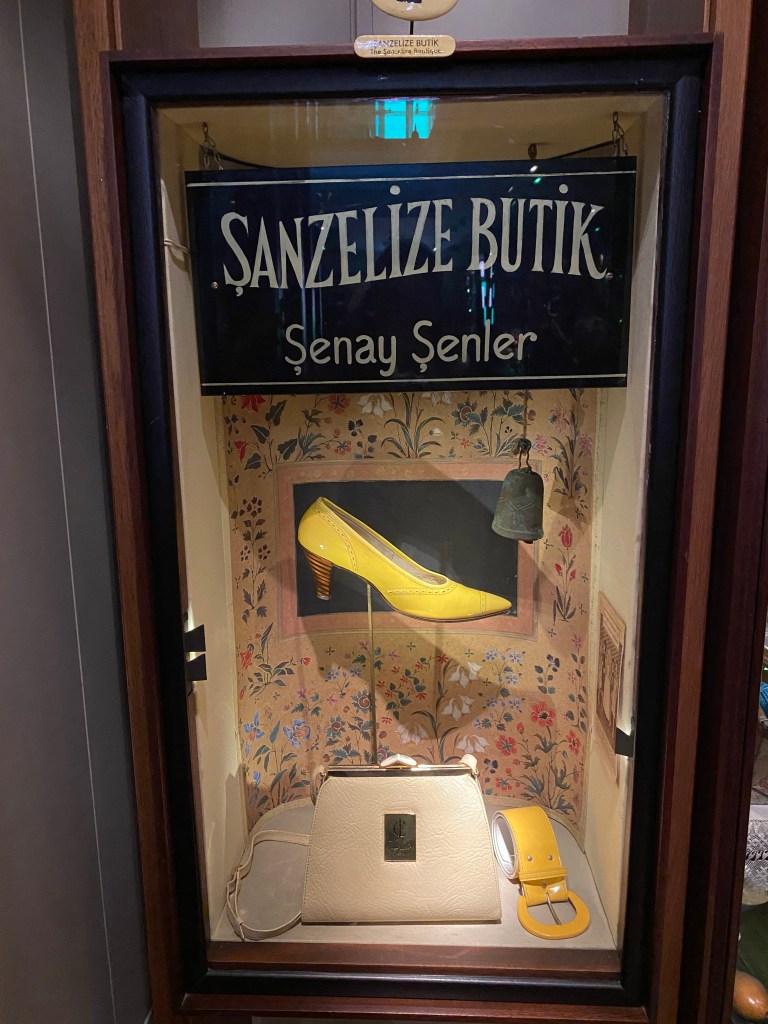
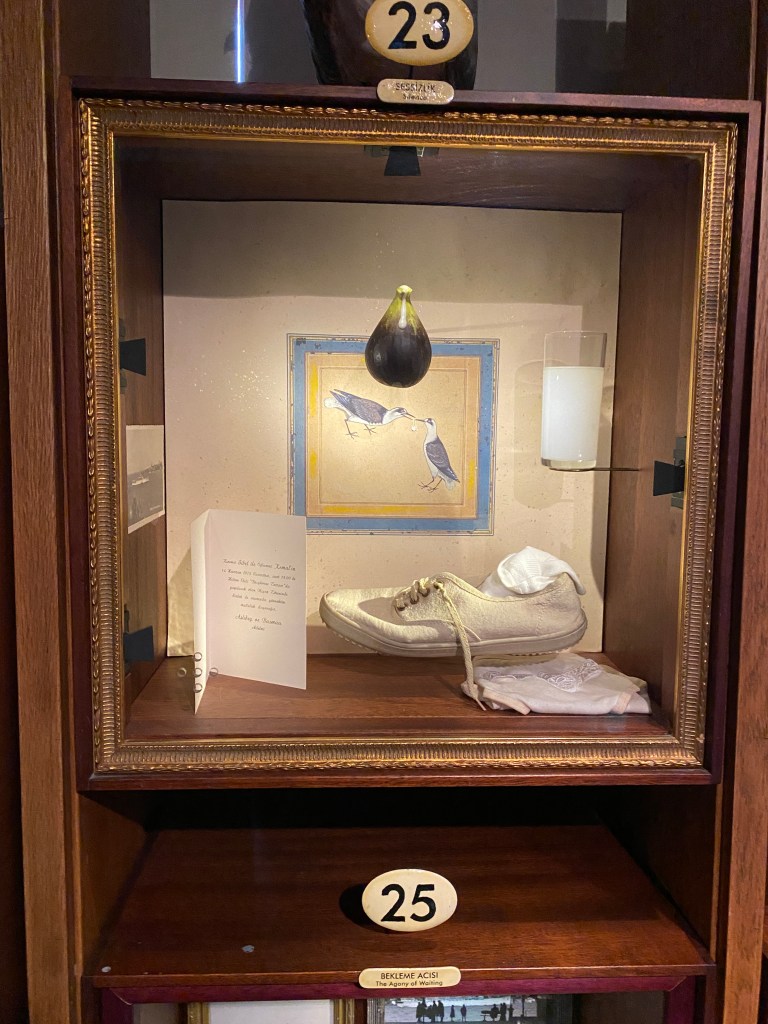
I find it fitting that this story of a man trapped between two worlds and two women takes place in a city that spans two continents. It’s as if the story of Kemal’s life and his experiences with Füsun is the story of Istanbul itself. Evidence of this can be seen in the artifacts displayed at the museum which cover life in Istanbul from the 1970s into the 2000s.
I visited the museum with my mother, who is also a fan of Pamuk’s story. Upon entering, we were pleasantly surprised at how busy the museum was and even more surprised that many of the visitors were men who seemed to have visited on their own volition. The story obviously touched many people from many cultures, and for good reason.
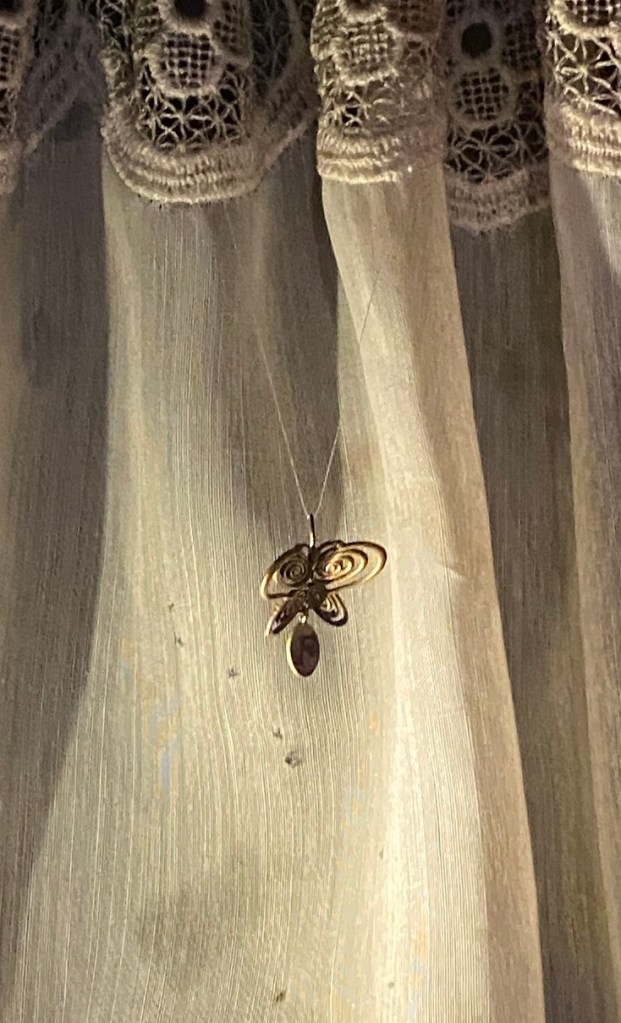
One of the most symbolic pieces in the novel and the museum is Füsun’s earrings, which are gold butterflies (replicas of her earrings are for sale at the museum, as well as at a thrift store across the street-and for much less than the museum’s listed price). The stamp used for entry is also in the shape of a butterfly. What better symbol of transformation is there than a butterfly? If one were ignorant of the metamorphosis a caterpillar undergoes s/he might find it difficult to believe that such a transformation was possible and surmise that the caterpillar and the butterfly were two completely different beings and therefore completely unrelated. It’s the same when one loses his/her innocence. The person s/he becomes as a result is in no way like the person s/he was before. They might as well be two completely different people. The loss, depending on how it occurs and what consequences it has, can break us, strengthen us, harden us or humble us. In every case it is profound, as is Pamuk’s story.
I understand Kemal’s tendency to want to hold onto items that he associates with Füsun. It is not unlike my tendency (or anyone else’s tendency) to be drawn to nostalgic or sentimental items, though Kemal takes it to new and concerning heights. Those items, when viewed, touched or even smelled, have the power to bring us right back to significant moments in our lives – Moments which made us feel happy, light and innocent, moments that once they pass, are gone forever. These items/moments, when strung together, tell our life stories. To paraphrase the first line of Pamuk’s book, they might have been the happiest moments in our lives, but we didn’t know it then. It’s only upon reflection that we come to appreciate them. Understanding that notion is part of the human experience no matter who one is or where one is from, which is why The Museum of Innocence was so crowded when I visited, and I’m sure it will continue to be visited by many for years to come.
If you haven’t read the book, The Museum of Innocence, I highly recommend it. The Netflix series is also absolutely wonderful. I’ve already watched it twice and am in love with one of the songs used in the show, Neco’s “Seni Bana Katsam”, which I have been playing on repeat since first hearing it. Lastly, if you ever have the opportunity to visit Istanbul, take it. It’s a city unlike any other with many extraordinary stories to tell and what is life without stories?


